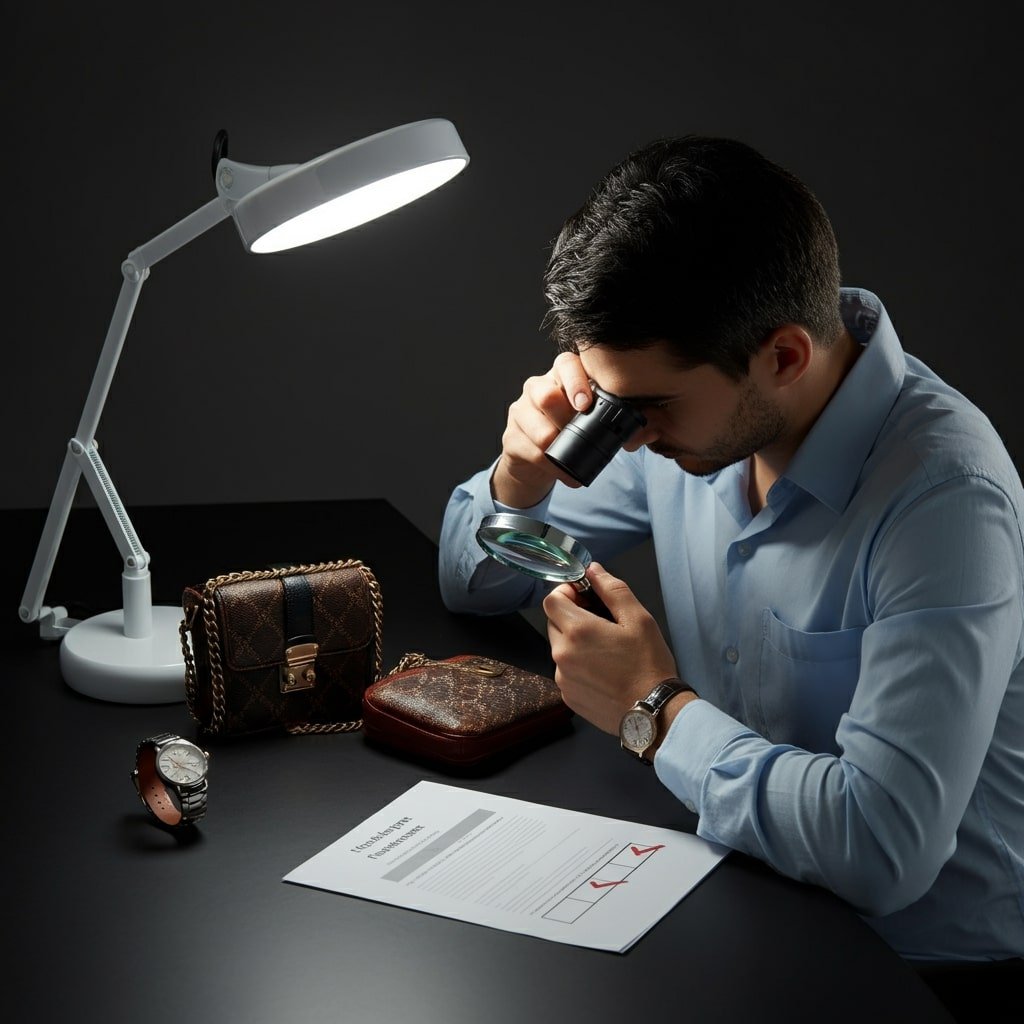
The deal seems too good to be true: a designer handbag for a fraction of the retail price, a pair of limited-edition sneakers that sold out instantly, the latest smartphone at an unbelievable discount. In the world of online marketplaces, counterfeit goods are a sad reality. Protecting yourself requires a keen eye and knowledge of what to look for.
Here’s a guide to spotting fakes in some of the most commonly counterfeited categories.
1. Designer Handbags & Accessories
Stitching
This is a major tell. Authentic bags have perfectly even, straight, and consistent stitching. Fakes often have sloppy, uneven, or loose stitches. Look closely at hard-to-reach areas like the interior seams.
Hardware (Zippers, Clasps, Logos)
Authentic hardware feels substantial, has a consistent finish (e.g., not too shiny or brassy), and often features the brand name engraved, not just stamped. Zippers should pull smoothly.
Logos and Fonts
Compare the brand’s logo on the item to an official photo online. Counterfeits often have slightly off fonts, spacing, or colors. The “R” in “®” might be in the wrong place, or the font weight might be incorrect.
Materials and Smell
Authentic leather has a distinct, pleasant smell. Fake leather often has a chemical, plastic-like odor. The material should feel high-quality, not stiff or rubbery.
2. Sneakers
The Box
Counterfeiters often cut corners on the box. Check the printing quality, the logo, and the style/code numbers. Compare them to images of a legit box online.
Stitching and Glue
Like handbags, stitching should be flawless. Look for excess glue stains or messy application around the sole—a common sign of a fake.
Logo and Tags
The placement, size, and quality of the brand logo on the tongue and side of the shoe are often slightly off on fakes. Check the inside tags for spelling errors and correct product information.
Overall Shape
Compare the shoe’s silhouette to an authentic pair online. Fakes can often have a slightly bulkier, slimmer, or just “off” shape.
3. Electronics (Smartphones, Tablets, Consoles)
Serial Numbers
Every genuine device has a unique serial number. Before meeting, ask the seller for it. Then, check it on the manufacturer’s official website (e.g., Apple’s Check Coverage page, Samsung’s support site). If it’s invalid, already activated, or shows a different product, it’s a fake.
Packaging and Accessories
Spelling mistakes on the box are a huge red flag. Accessories should be official and high-quality. Cheap, unbranded chargers and cables included with a “new” phone indicate a counterfeit.
Software and Performance
When you meet, turn on the device. The operating system should be the genuine article (iOS, stock Android) and run smoothly. Laggy performance, a low-resolution screen, or an unfamiliar operating system are dead giveaways.
The Ultimate Rule: Trust Your Gut
If the price is dramatically lower than the market average, if the seller is pressuring you, or if something just feels “off,” walk away. A genuine seller will understand your need to verify authenticity and will be patient.
A little knowledge and a lot of caution are your best defenses. By learning these key authentication tips, you can shop for brand-name items with confidence, ensuring your money goes toward a genuine product, not a clever fake.